

Historic places near the National Cycle Network
Cycle to historic places near popular national cycle routes.
Cycling is a great way to enjoy our historic sites, all while improving your health and wellbeing and reducing your carbon footprint from travel.
Read on for some inspiration on how visit Historic Scotland attractions while enjoying the National Cycle Network (NCN). Remember you can get a 25% discount when you arrive at selected Historic Scotland sites by train, bus, or bike.
Linlithgow Palace to Cramond
This route will take you through nearly 2000 years of Scottish history.
Start at Linlithgow Palace, birthplace of Mary Queen of Scots. Built and added to over two centuries by the Stewart kings, it’s a superb Renaissance residence.
Then head east along NCN Route 754. This great traffic free route takes you along the Forth and Clyde Canal. Look out for listed bridges and aqueducts, including the Philpstoun Aqueduct.
When you reach Edinburgh, join NCN Route 75. This will take you up to the magnificent Edinburgh Castle! This world-famous icon has dominated the skyline of Scotland’s capital city for centuries.
From here, join NCN Route 1 and head for the coast, finishing up at the picturesque village of Cramond. Here you can examine the curious Roman carving at Eagle Rock and enjoy a spot of bird watching at Drum Sands.
On this route
Linlithgow Palace
Explore the ruins of Mary Queen of Scots' birthplace. Linlithgow Palace was once a superb Renaissance residence, built and added to by the Stewart kings.

Edinburgh Castle
Discover a world-famous icon. Perched on a volcanic plug, Edinburgh Castle has dominated the skyline of Scotland’s capital city for centuries.
Book in advance to guarantee entry

Eagle Rock
Eagle Rock is a weather-worn carving of an eagle, thought to date to the Roman occupation of Cramond, between about AD 140 and the early AD 200s.

Stirling Castle to Dunfermline Abbey
Start your day at Stirling Castle, the preferred residence of most of Scotland’s later medieval monarchs. William Wallace, Robert the Bruce, Mary Queen of Scots and Bonnie Prince Charlie all feature in its eventful history.
From here, head east along NCN Route 76. As you leave Stirling, you’ll spot Cambuskenneth Abbey on your right. This is the resting place of King James III and his wife Queen Margaret.
Follow the route through Tullibody and Alloa. until the next stop, Clackmannan Tower. This 1300s tower house was built by a descendant of Robert the Bruce and was once visited by Rabbie Burns. It stands on King’s Seat Hill and has excellent views of the surrounding countryside.
End your ride at Dunfermline Abbey. This royal mausoleum hosts the tombs of St Margaret, David I and Robert the Bruce.
On this route
Stirling Castle
Visit Stirling Castle, one of Scotland's greatest stone castles, key to the story of Scotland's past.
Book in advance to guarantee entry

Cambuskenneth Abbey
Visit the resting place of King James III and his wife Queen Margaret in the shadow of the mighty Stirling Castle.

Clackmannan Tower
Admire the imposing keep of a 1300s tower house, visited by Robert Burns and built by a descendant of Robert the Bruce.
Grounds or exterior access only

Dunfermline Abbey and Palace
Some of Scotland’s great kings and queens, including Robert the Bruce and St Margaret, were laid to rest at Dunfermline Abbey.
Some restrictions in place

Kilberry to Dunadd Fort
The Caledonia Way (NCN Route 78) runs from Campbeltown to Inverness, along 235 miles of spectacular scenery.
For a day out packed with history, you could start at Kilberry Castle and marvel at the Kilberry Sculptured Stones. This impressive collection includes early Christian grave markers and medieval grave slabs.
Head north and the route will take you through Kilmartin Glen. This rich prehistoric landscape is bursting with historically significant monuments. You can explore its linear cemetery – start at the southernmost point, Ri Cruin Cairn. The Kilmartin Stones are another must-see. Kilmartin’s church and graveyard are home to over 23 fine sculptured stones, ranging in date from the 900s to the 1600s.
Finish at Dunadd Fort with a panormaic view as your reward. This site has been occupied since the Iron Age and is internationally renowned as a royal power centre of the Gaelic kings of Dál Riata.
On this route
Kilberry Sculptured Stones
The Kilberry Sculptured Stones cover a range of styles and eras – from early Christian grave-slabs to late-medieval cross fragments.

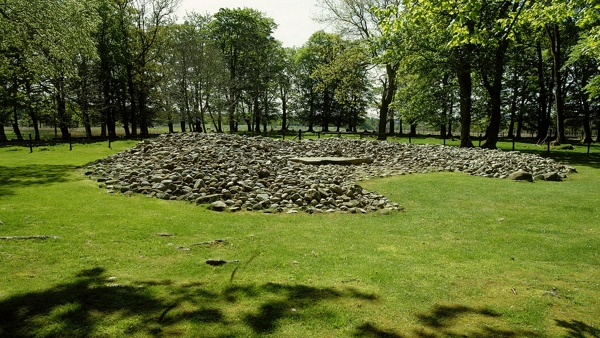
Kilmartin Glen: Ri Cruin Cairn
Reach the southernmost point of the Kilmartin Glen’s prehistoric ‘linear cemetery’.
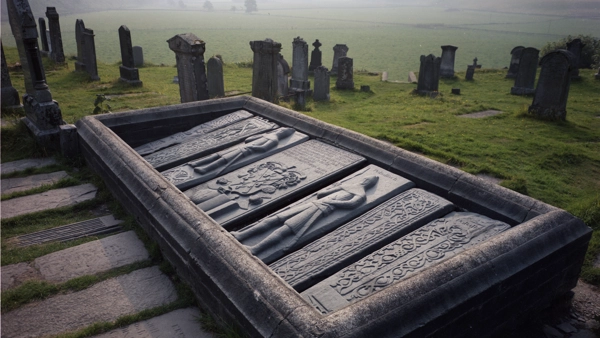
Kilmartin Glen: Kilmartin Stones
Trace the story of Kilmartin Glen through a collection of sculptured stones, carved over a 700-year period.
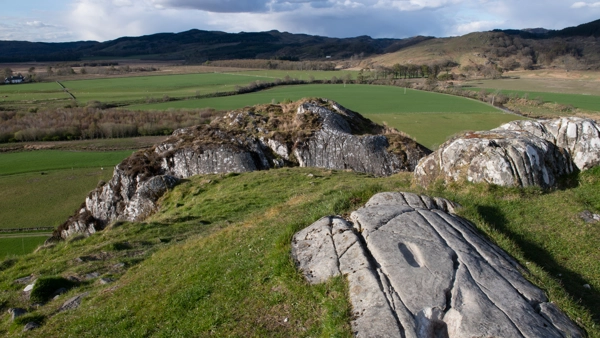
Kilmartin Glen: Dunadd Fort
Climb this spectacular rocky outcrop to see what was once a royal power centre of Gaelic kings.
Kirkintilloch to the Forth Bridge
For an epic ride, saddle up at Kirkintilloch and head east along NCN Route 754. You’ll pass close to several sites along the Antonine Wall, including Rough Castle, the wall's best-preserved fort.
Join NCN Route 76 at Grangemouth and you’ll be taken out to the coast. You’ll pass by Kinneil House, a place with a rich history stretching from the Roman frontier through to the Industrial Revolution.
Keep cycling along the coastal route and you’ll soon encounter Blackness Castle. Mighty fortifications make this 15th-century castle look like a ‘ship that never sailed’.
Finish your ride at at South Queensferry, in the shadow of the Forth Bridge. It’s the perfect place to watch the sun go down!
On this route
Antonine Wall: Rough Castle
Rough Castle fort near Bonnybridge is the best preserved fort on the Antonine Wall.

Kinneil House
Explore 2,000 years of history around this impressive house, from Roman occupation in the surrounding estate to the Industrial Revolution.
Grounds or exterior access only

Blackness Castle
Blackness Castle's mighty fortifications make this 15th-century castle look like a ‘ship that never sailed’. It's now a star of the screen.

The Forth Bridge
The Forth Bridge is an iconic Scottish landmark and engineering marvel.

Be a responsible tourist
The type of visit featured here is a great a example of how you can be a responsible and sustainable tourist, by cutting down on carbon emissions, protecting our environment and supporting local communities.